 Phone: 407-214-2646
 info@bestwaterheater.com
Phone: 407-214-2646
info@bestwaterheater.com
info@bestwaterheater.com
Phone: 407-214-2646
info@bestwaterheater.com
 Phone: 407-214-2646
info@bestwaterheater.com
Phone: 407-214-2646
info@bestwaterheater.com

Including filter system and high-performance Vinyl Chloride filter.



Vinyl chloride is a synthetic chemical tied to plastics production that can enter drinking water when industrial solvents break down or materials leach over time. It doesn’t always change taste, smell, or color, so homeowners in Christmas may have no obvious signs if it’s present; many local properties rely on private wells, which can conceal contaminants. The sure way to know is a water test that screens for volatile organic compounds (VOCs). If that testing detects vinyl chloride, it’s wise to consider steps to lower exposure throughout the house.
Even if vinyl chloride shows up only at a single faucet, it can affect everyday tasks like cooking, making coffee, brushing teeth, and filling pet bowls — routines familiar to families around Fort Christmas Historical Park and across Orange County. Many homeowners in Christmas choose whole-house treatment so every tap delivers treated water, reducing the chance the contaminant reaches showers, laundry, or outdoor spigots. The aim is straightforward: dependable treatment that matches the home’s water needs in our humid subtropical climate and hard-water conditions.
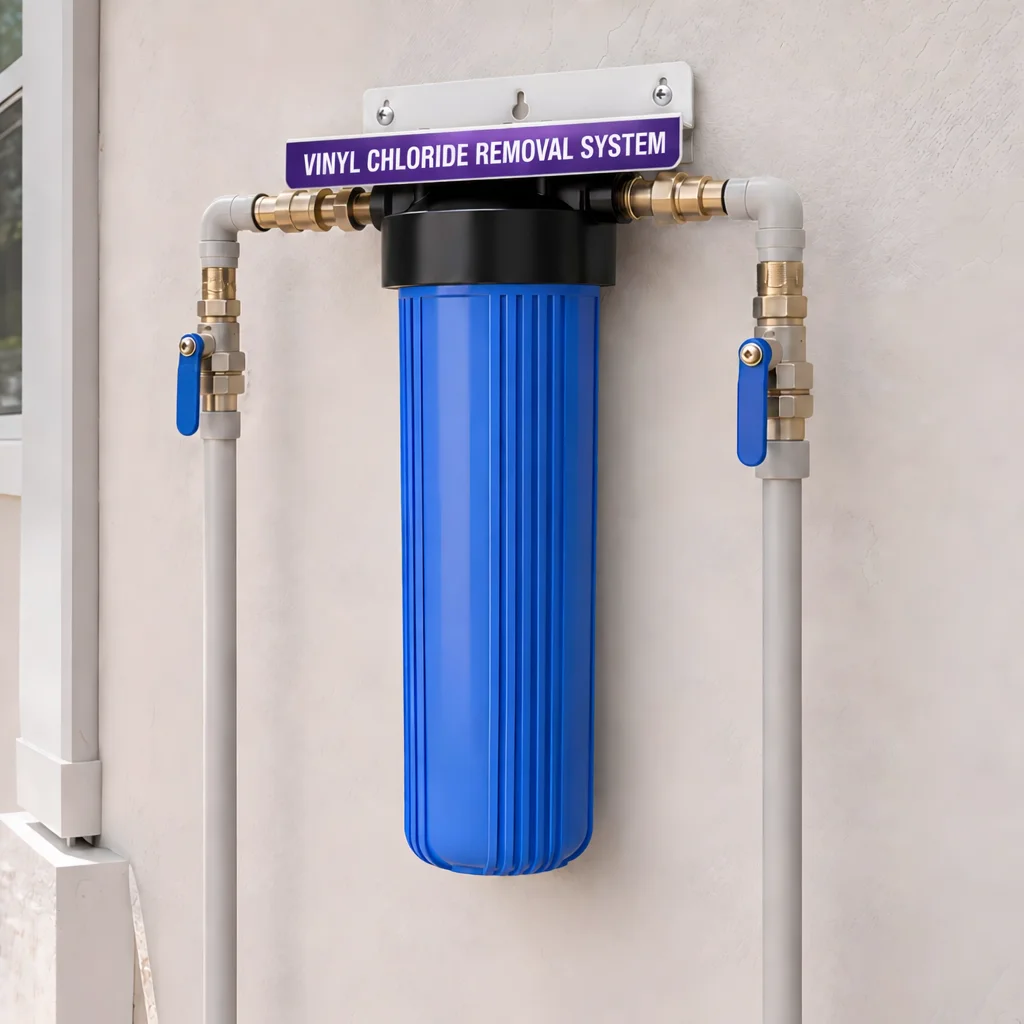
For vinyl chloride, the top single-filter choice for a whole-house system is a catalytic activated carbon tank made for VOC reduction. Activated carbon adsorbs organic compounds as water flows through the media, and catalytic carbon is selected when homeowners want improved performance on VOCs and faster reaction sites. Because vinyl chloride is typically handled as a volatile organic compound, carbon adsorption is a primary, established method, and correctly sizing the tank ensures sufficient contact time for meaningful removal.
Mr. Pure Water engineers whole-house catalytic carbon systems to treat water where it enters Christmas homes, so one unit can protect showers, sinks, appliances, and the kitchen without installing multiple point-of-use filters. The carbon media will eventually become saturated and should be replaced on a schedule informed by your household’s water use and specific water quality — common considerations for hard well water in the area. Testing before and after installation helps verify the system is delivering the expected reduction for your home.
 407-214-2646
 info@bestwaterheater.com

